Reading and writing struggles are rarely just about reading and writing. I look at your whole learner, through two lenses. As a reading specialist, I look for literacy strengths and any gaps in skills; as a behavior specialist, I watch for motivation and frustration, and find the kind of teaching that works best for your learner. Then we build the plan, together, with your learner.

Every learner is different, but the worries families bring are often the same.
My student reads a passage, then can't tell me anything about what they just read.
Getting started on an assignment is a battle every single time.
My child has an IEP, and I'm not sure how to support them at home.
I don't fully understand the IEP, or how to make sure my child gets the right support.
My young adult has transitioned out of high school, but still wants to learn, build skills, and be part of a community.
My child understands so much more than they're able to show.
If any of these sound familiar, I can help.
Request a free consultation →Five areas of support, shaped by your learner's strengths, needs, and interests.
Sounding out words, reading smoothly, and understanding what they read: the science of reading, applied to your reader.
Learn more →From getting ideas out of their head onto the page: written expression, organization, and composition.
Learn more →Planning, organization, homework strategies and support, speaking up for themselves, and independence: the skills behind the skills.
Learn more →Identify strengths, pinpoint needs, and plan the next instructional steps, so support starts in the right place.
Learn more →A single Quick Call, a starter package, or an educator beside you at the meeting: plain-language help with your child's IEP.
Learn more →Looking for a tutor? Every session here is one-on-one with a certified reading specialist and special education teacher: reading, writing, and the homework, organization, and study skills that middle and high school demand, for any learner who is struggling or wants to get ahead.
One-on-one sessions meet 1 to 3 times a week, with a reduced rate for additional sessions in the same week, and rescheduling within the same week is always free. View rates (PDF, page 1) and the cancellation policy. Parent workshops begin September 29; see the dates and reserve a seat.
I use evidence-based instruction and assessment to meet your learner exactly where they are, with data guiding every decision and humor built into every session. One of the first things I learn about a new student is what makes them laugh, because laughter builds trust and turns "I have to go to my lesson" into "I get to." Your learner isn't a passive recipient; they're an equal partner, building skills they can own: reading and writing, comprehension and critical thinking, planning and organizing, and the independence and confidence that come with them.
How I work →
For young adults beyond high school, I offer individualized continued learning built around their own goals: continuing to grow reading and writing skills, practicing the everyday literacy that supports work and independent living, and building confidence along the way. Every session meets your learner exactly where they are, because it is never too late to keep learning.
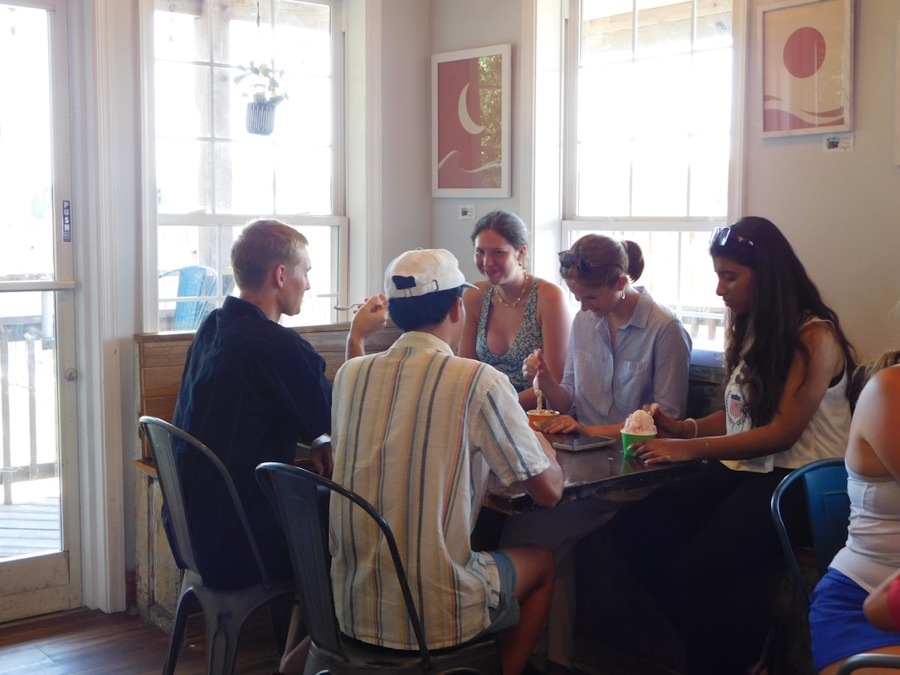
We also offer The Next Page Book Club, a weekly small-group community for young adults, 18 and older, who want to connect. Many members are autistic or have other developmental or learning differences, and the group is built with them in mind: a place to read together, talk, laugh, and make real friends. The first meeting is Tuesday, October 13, 11:30 am to 12:30 pm; space is limited to six, and registration is required.
Throughout my years in education, I have seen students struggle with reading and writing, and grow frustrated. Over time, that frustration can change how a learner feels about themselves, as a student and as a member of their school community. I want to give these students the skills and the confidence to share who they are and what they know, and to see themselves as valued members of that community.
I have also observed students who spend their early school years learning how to be a student: how to sit with a group, follow a routine, feel safe in a classroom. That is important work, and those skills matter. But while a child is working hard at becoming a confident student, the foundational skills of reading and communication can quietly slip by.
I have worked with other students, especially those with complex communication needs, who understand far more than they have ever been able to show. They simply haven't yet found the way of communicating that lets their knowledge shine through.
And I have watched students transition out of high school without an opportunity to keep growing their literacy and communication skills. They may take a pause before college or enter a transitional work program, but they still have so much capacity to learn to read, write, and communicate what is important to them.
None of this is anyone's fault. Classrooms are busy places, teachers give everything they have, and every child's path is different. But these learners deserve the chance to fill in the gaps, and it is never, ever too late.
That is why Hill Education Services exists: so that every learner, whether in elementary school, in high school, or transitioned out of formal education, can fill in the gaps and keep growing as a reader, a writer, and a communicator, with plenty of laughter along the way. So that every learner can share what they know, and take part in their community, in the way that's meaningful to them.
Common signs: guessing at words instead of sounding them out, reading a passage but being unable to retell it, avoiding reading at home, or homework battles that center on reading and writing. A literacy assessment pinpoints exactly what's happening, and what will help.
School-age students through young adults, including learners with autism, complex communication needs, ADHD, or learning differences, and anyone who benefits from individualized instruction.
Both: at the Doylestown office or virtually. In-home sessions are also available within 15 miles of Doylestown (a small travel fee may apply).
Yes. For learners under 18, a parent or another authorized adult stays on the premises for the whole session, at the office or at home. You're welcome to wait in the reception area. For virtual sessions, a parent needs to be at home or reachable by phone.
Yes. As a certified special education teacher, Susan reviews your child's IEP and records, explains them in plain language, helps you prepare for meetings, and shows you how to support the IEP's goals at home.
Yes, and more. Sessions are one-on-one like tutoring, but they start with an assessment, follow a systematic plan, and are taught by a certified reading specialist and special education teacher who tracks progress and adjusts as your learner grows. Any learner is welcome, kindergarten through high school and beyond.
A 15-minute phone or virtual conversation about your learner: what you're seeing, what you've tried, and what a good next step looks like. No pressure, no obligation.
The office is in Doylestown, PA, and Susan serves families throughout Bucks and Montgomery Counties, including Chalfont, New Britain, Warrington, Warminster, Buckingham, New Hope, and Furlong, with virtual sessions available anywhere in Pennsylvania.
The best first step is a conversation: a free 15-minute phone or virtual consultation about your learner's needs and next steps.
No pressure, no obligation, just next steps.